

6
Introduction: Why Google Ads Still Dominates Digital Growth
In today’s hyper-competitive digital landscape, visibility is everything. No matter how strong your product or service is, if your audience can’t find you at the exact moment they’re searching—you’re losing revenue.
This is where Google Ads becomes one of the most powerful tools in modern marketing.
Google Ads is an online advertising platform that allows businesses to place ads across:
- Google Search results
- YouTube
- Google Display Network (millions of websites and apps)
- Google Shopping
The core idea is simple: you pay to get in front of people who are already searching for what you offer.
But beneath that simplicity lies a sophisticated system of bidding, targeting, and optimization that determines whether your campaigns generate profit—or drain your budget.
Understanding How Google Ads Works
At its core, Google Ads operates on a Pay-Per-Click (PPC) model.
This means:
- You only pay when someone clicks your ad
- You bid on keywords relevant to your business
- Your ad competes in an auction every time someone searches
The Google Ads Auction (Simplified)
When someone types a query into Google:
- Advertisers targeting that keyword enter an auction
- Google evaluates:
- Your bid (how much you’re willing to pay)
- Your ad quality (relevance, expected click-through rate, landing page experience)
- Ads are ranked and displayed
👉 Important: The highest bid doesn’t always win.
Google rewards relevance and user experience just as much as budget.
Goals vs Conversions: The Foundation of Performance Marketing
One of the most misunderstood (but critical) aspects of Google Ads is the difference between goals and conversions.
What Are Goals?
Goals are the actions you want users to take after clicking your ad.
Examples include:
- Purchasing a product
- Filling out a contact form
- Signing up for a newsletter
- Calling your business
Think of goals as your desired outcomes.
What Are Conversions?
A conversion occurs when a user actually completes that goal.
Example:
- Goal: Sell a product
- Conversion: A user clicks your ad → buys the product
👉 In simple terms:
Goals = Intent
Conversions = Results
The Reality of Google Ads Costs
Here’s a crucial truth many beginners overlook:
You pay for clicks—not outcomes.
That means:
- Someone clicks your ad → you pay
- Even if they don’t buy, sign up, or convert → you still pay
This is why strategy and optimization are everything.
Why This Matters
If your campaigns aren’t optimized:
- You can burn through budget quickly
- Traffic may not convert
- ROI becomes negative
But when done correctly:
- Every click becomes an opportunity
- Campaigns scale profitably
- Google Ads becomes a predictable revenue engine
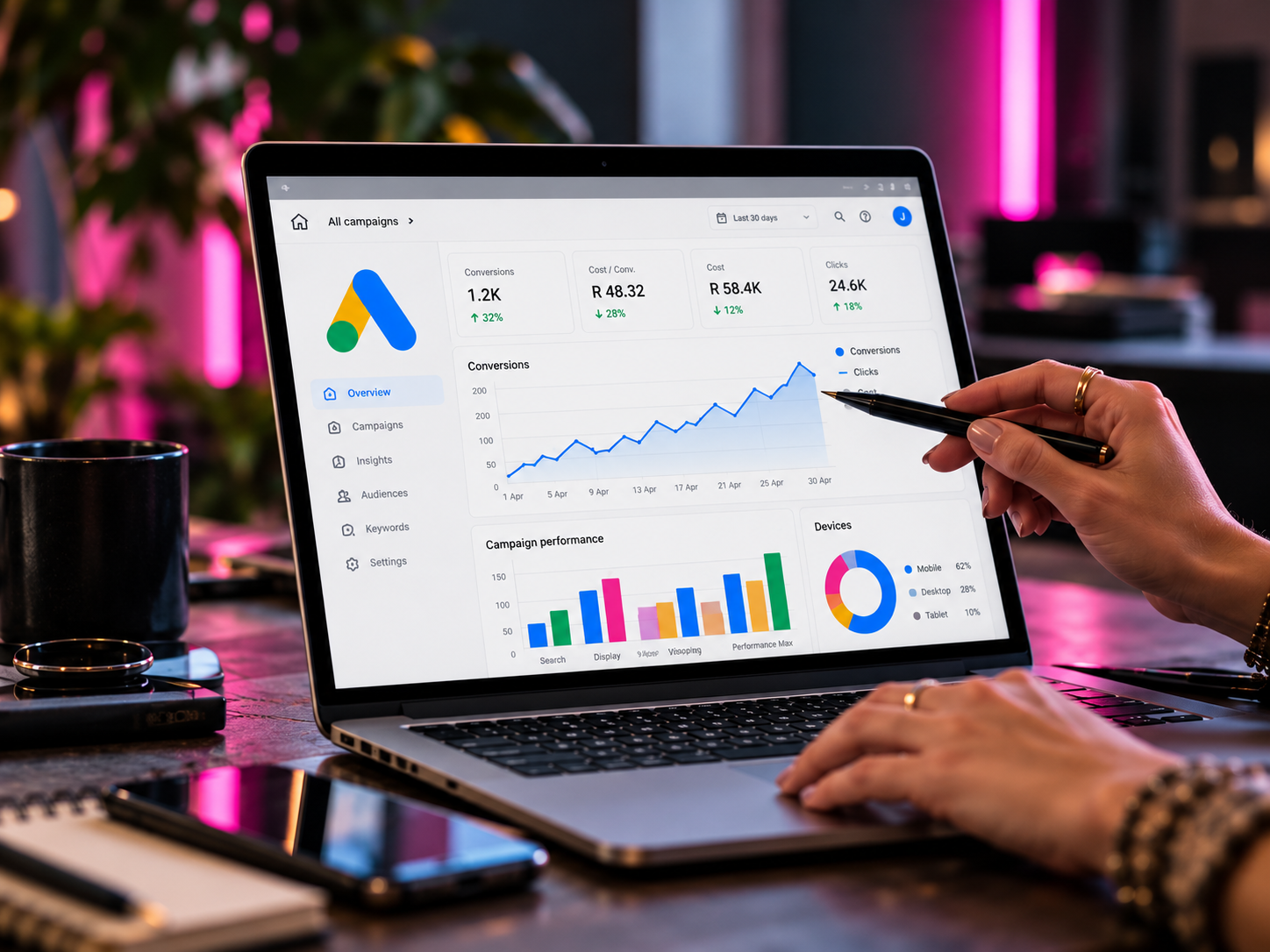
Cost Per Conversion: The Metric That Actually Matters


6
While clicks and impressions are useful, Cost Per Conversion (CPA) is where real performance is measured.
What is Cost Per Conversion?
Cost per conversion is the average amount you spend to achieve one successful outcome.
The Formula:
Cost Per Conversion = Total Ad Spend ÷ Number of Conversions
Example:
- You spend $500 on ads
- You get 10 conversions
👉 Your cost per conversion = $50
Why Cost Per Conversion Is So Important
This metric tells you:
- Whether your campaigns are profitable
- How efficiently your budget is being used
- Where to optimize for better performance
A Simple Profitability Check:
If:
- Your product sells for $100
- Your cost per conversion is $50
👉 You’re profitable
But if:
- Your cost per conversion is $120
👉 You’re losing money
Key Factors That Influence Conversions
Success in Google Ads isn’t just about running ads—it’s about optimizing the entire journey.
1. Keyword Targeting
Choosing the right keywords ensures:
- You attract high-intent users
- You reduce wasted spend
2. Ad Copy Quality
Your ad must:
- Match user intent
- Be compelling and clear
- Include strong calls-to-action
3. Landing Page Experience
Even the best ad will fail if:
- The page is slow
- The message doesn’t match the ad
- The user journey is confusing
4. Audience Targeting
Refining your audience improves:
- Relevance
- Conversion rates
- ROI
The Conversion Funnel: Turning Clicks Into Customers
Think of Google Ads as the top of your sales funnel.
The journey looks like this:
- Search Intent – User searches for a solution
- Ad Click – Your ad captures attention
- Landing Page – User evaluates your offer
- Action – Conversion happens
Every stage must be optimized.
👉 If one step fails, conversions drop.
Strategies to Lower Your Cost Per Conversion
1. Improve Quality Score
Google rewards:
- Relevant ads
- Strong click-through rates
- Good landing pages
Higher quality score = lower costs
2. Use Conversion Tracking Properly
Without tracking:
- You’re guessing
- You can’t optimize effectively
Set up tracking for:
- Purchases
- Leads
- Calls
3. A/B Test Everything
Continuously test:
- Headlines
- Descriptions
- Landing pages
Small improvements = major gains over time
4. Focus on High-Intent Keywords
Not all traffic is equal.
Compare:
- “Buy running shoes online” ✅ (high intent)
- “Best running shoes” ❌ (research phase)
5. Optimize Landing Pages
Ensure:
- Fast load speed
- Clear messaging
- Strong call-to-action
- Mobile responsiveness
Common Mistakes Businesses Make
Avoid these costly pitfalls:
- ❌ Running ads without conversion tracking
- ❌ Sending traffic to a generic homepage
- ❌ Ignoring data and analytics
- ❌ Targeting overly broad keywords
- ❌ Not optimizing campaigns regularly
Google Ads as a Growth Engine
When executed correctly, Google Ads becomes more than just advertising—it becomes a scalable acquisition system.
It allows you to:
- Predict customer acquisition costs
- Scale campaigns based on performance
- Generate consistent leads or sales
Final Thoughts: Turning Spend Into Strategy
Google Ads is not just about spending money—it’s about investing intelligently.
The difference between success and failure comes down to:
- Strategy
- Optimization
- Data-driven decision making
Remember:
- Clicks bring traffic
- Conversions drive revenue
- Cost per conversion determines profitability
Master those three elements, and Google Ads can become one of the most powerful tools in your digital growth strategy.